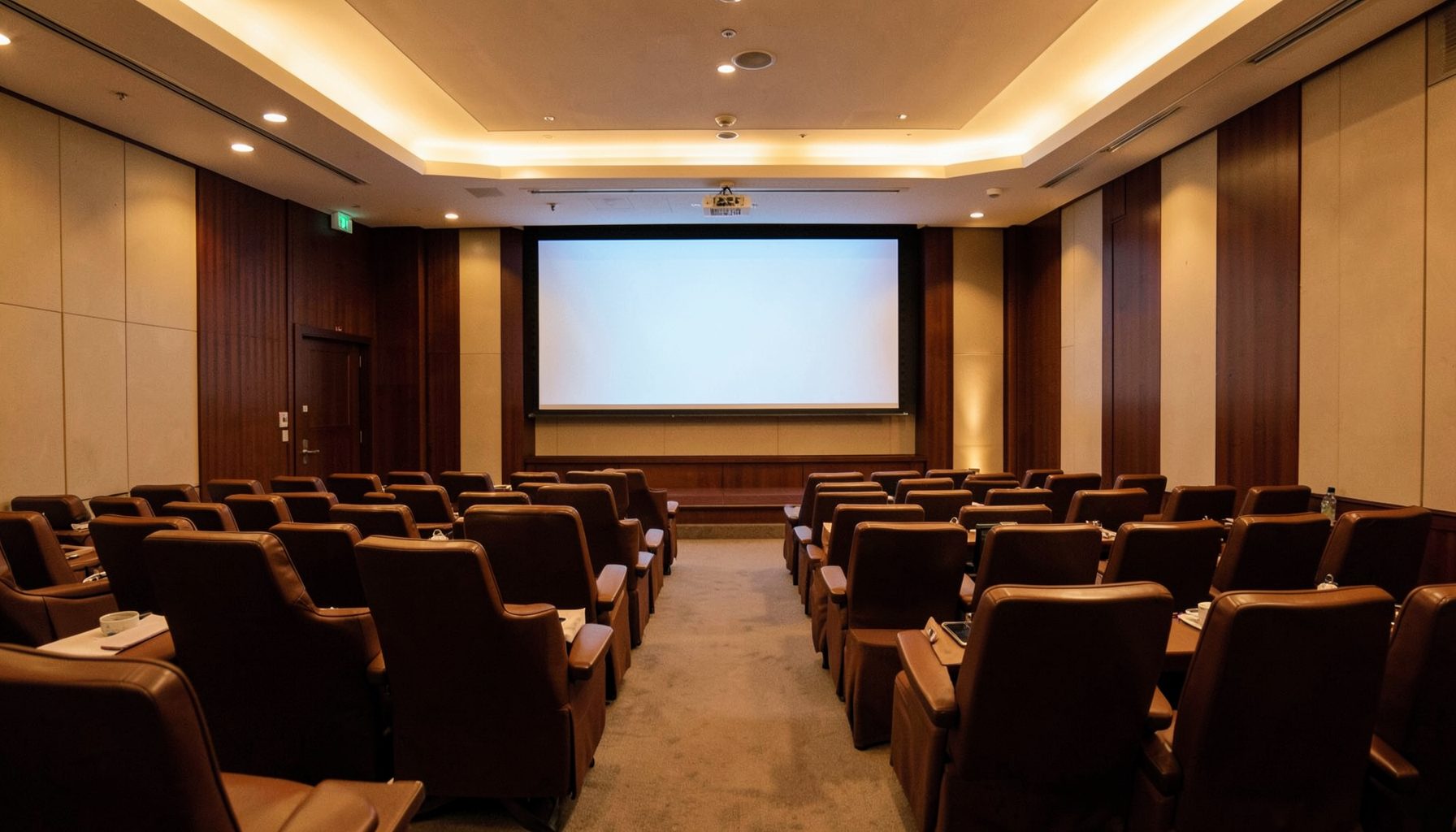
Chicago’s public library: a quiet workspace near McCormick Place
Chicago’s public library can be a useful working base around the RSNA 2020 annual meeting in Chicago, dated 29 November to 4 December 2020. Delegates arranging 3-star, 4-star or 5-star rooms through the meeting’s hotel and group-registration service still needed somewhere calm for notes, programme review and calls home.
The most practical options are South Loop Branch at 225 West Michigan Street and the Harold Washington Library Center at 400 South State Street. Both are roughly two kilometres from McCormick Place, depending on the entrance and route, and provide a welcome alternative to a hotel lobby.
Australian radiologists will recognise the civic appeal of a public reading room, whether comparing it with Sydney’s State Library or Melbourne’s State Library Victoria. The practical difference is that a conference-day library visit still follows local access rules, opening hours and quiet-zone etiquette.
A calm alternative to the conference hotel
Start with South Loop Branch at 225 West Michigan Street, roughly two kilometres from McCormick Place. It is compact and practical, with reading areas, public computers and staff who can direct visitors. For a larger civic setting and broader collections, the Harold Washington Library Center at 400 South State Street offers a more spacious, landmark experience.
An Australian delegate may compare this with browsing at the State Library of NSW or State Library Victoria, but the conference-day advantage is clearer: the public reading room is quieter than a hotel business centre and costs nothing to enter. Keep calls and conversations outside, and check branch-specific rules before settling in with a laptop.
Finding your way from McCormick Place
Allow 20–30 minutes for the walk, or use a CTA bus or rideshare when time is limited. Chinatown, the Museum of Science and Industry and the South Loop streetscape provide useful waypoints, while a phone map can account for the entrances around the McCormick Place convention complex.
Chicago’s transport system uses the Ventra card and app rather than Sydney’s Opal or Melbourne’s Myki. Visitors can buy a fare or pass at a retail outlet, then tap each ride, so checking the correct fare before departure is worthwhile. Major stations and airport services also offer transport options for delegates arriving from Australia.
November weather can feel sharper than a typical Melbourne or Sydney spring, especially where Lake Michigan creates strong wind. Carry a compact rain jacket and a light layer, keep valuables inside rather than in an unattended trolley, and allow extra time if hotel luggage must be collected before the library session.
Turning library access into productive work
Visitors who are not Chicago residents can generally request a library visitor card using acceptable identification and proof of address. Requirements and processing times can change, so consult the relevant branch before travelling there with documents to scan, print or upload.
A useful setup includes a charged laptop, headphones, an adapter, a power bank and any papers already downloaded for offline reading. Public computers, Wi-Fi and bookable study rooms may be available, although access and pandemic-era restrictions varied between branches. Teams needing a private video call should reserve a suitable room rather than assuming a public area is available.
The broader RSNA travel site also carries ancillary international guidance, including Italy casino regulations, but that belongs in general destination research rather than in the practical library plan.
Recommendations for a productive library visit
A short preparation routine prevents most delays and keeps the session focused:
- Start with South Loop Branch for convenience, or choose the Harold Washington Library Center when more space, services or a quieter atmosphere are priorities.
- Bring photo identification and proof of address, and check whether a visitor card must be arranged before arrival.
- Pack chargers, headphones, essential documents and a refillable water bottle, but observe restrictions on food, drinks and large bags.
- Reserve a study room where required and schedule calls outside the reading area, especially when the rest of the Australian delegation is working remotely.
Australian teams often coordinate through WhatsApp while travelling, but they should not assume the public library can support a whole delegation’s group registration or equipment needs. A reserved room, hotel business centre or private meeting space may be more suitable for confidential discussions and multi-person calls.
Building a useful study day beyond the reading room
What an Australian might call an arvo coffee needs a local translation: ask for filter coffee, a cappuccino or a drink to go. “Takeaway” is understood in Chicago, although “to go” is more common. Cafes around the South Loop can provide a useful break, but the best working rhythm is usually one focused library block followed by a short walk through nearby neighbourhoods.
For delegates adding a regional day trip, destination-led sites can be as useful as a hotel room block: Lescheires tourism guidance shows how a regional portal presents stays and activities, although Chicago visitor channels are the relevant starting point here.
Delegation budgets should also account for US dollars, taxes, the exchange rate against the Australian dollar and tipping customs. Hotel room blocks often exclude tax or incidentals, so rates should be compared on a final-cost basis. For remote calls, remember that late-November Chicago is on Central Standard Time, while Sydney is on AEDT and Brisbane on AEST.
Reserve the library visit, confirm the correct branch and entrance, and arrive with your identification, documents and equipment ready. For the RSNA 2020 programme, make the public reading room a deliberate working slot rather than an improvised gap between meetings.